Amsted Rail
Engineering Intern
As an Engineering Intern at Amsted Rail, I contributed to both freight and transit rail projects involving mechanical design, structural analysis, fluid simulation, and testing. As part of the Research and Testing group, I helped develop and evaluate new solutions for suspension and structural components aimed at improving ride quality, performance, and reliability. I also helped improve internal engineering workflows by implementing automated tools for data organization and technical reporting.
Simulation and Analysis
Damper Orifice DOE
A hydraulic damper was being developed for future train suspension systems, and its internal fluid behavior needed to better understood before moving forward with the final design. I used CFD to simulate the damper in operation and compare different orifice configurations before fabrication and testing. The results helped guide the design toward the target damping performance while also making sure cavitation would not become an issue.
Technical work
- Modeled fluid regions of damper in Creo
- Developed multiphase transient models in ANSYS Fluent simulating damper movement
- Ran a parameter study on different orifice length to find optimal configuration that maximized dampening while preventing cavitation
Testing
Lateral Fixture Design
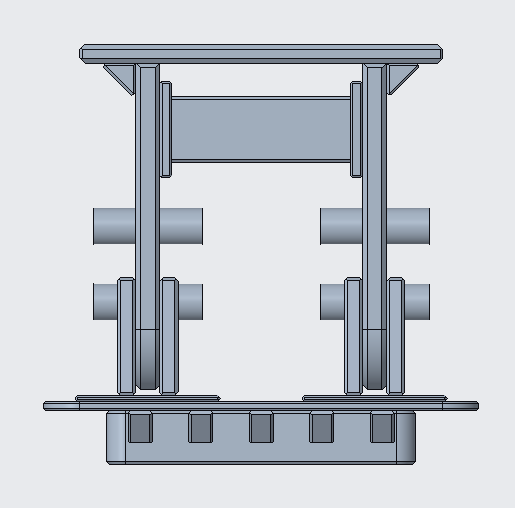
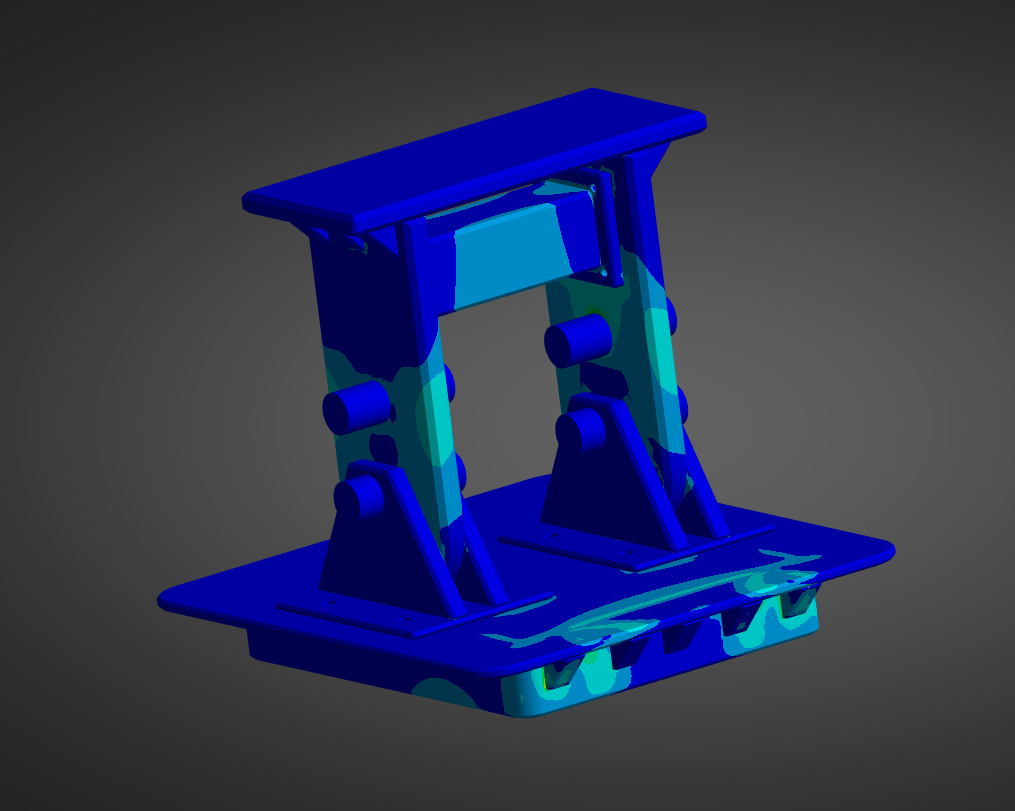
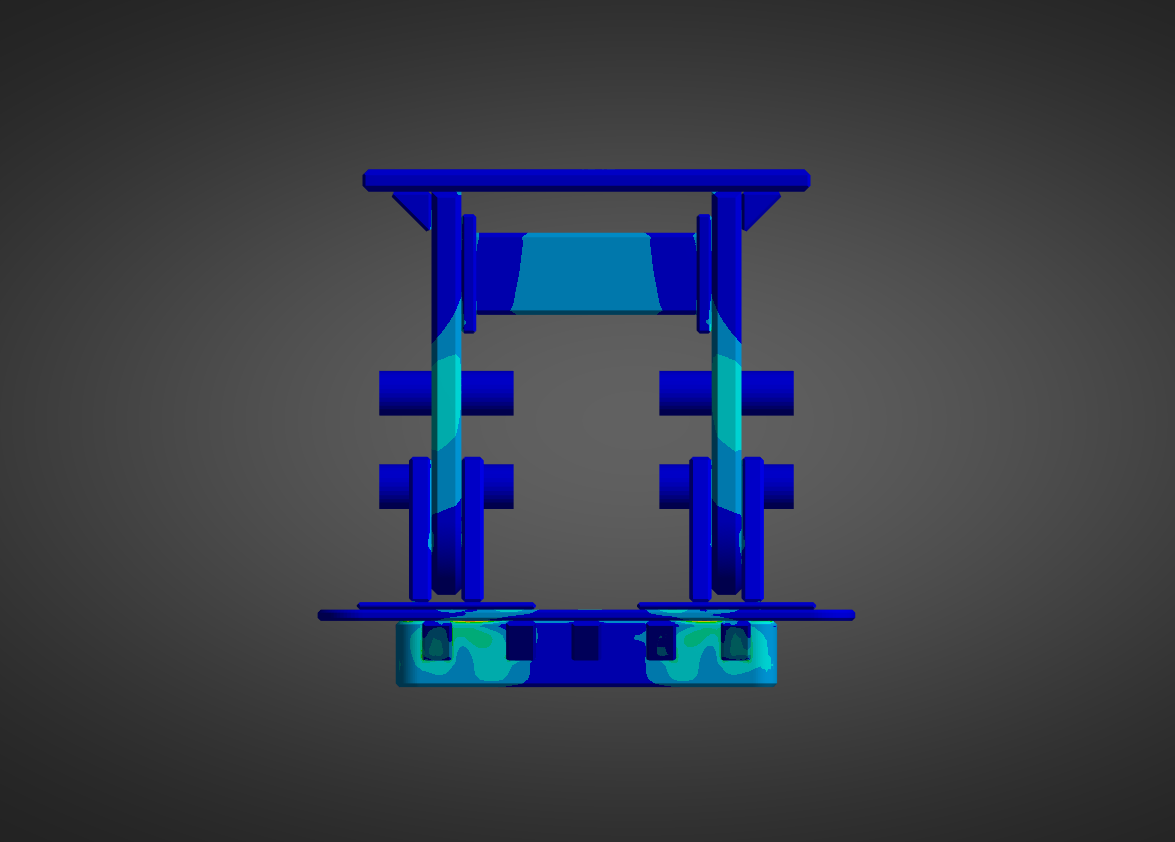
A new bolster design was not compatible with the existing fatigue test setup, and therefore the lateral actuators could no longer apply load at the required locations. I designed a new fixture in Creo to transfer the actuator loads into the bolster and rock it back and forth during testing. I then used ANSYS Mechanical to verify that the fixture could withstand the applied loads and perform as intended.
Technical work
- Designed a new lateral loading fixture in Creo for an updated bolster geometry
- Performed static structural analysis in ANSYS Mechanical to verify strength and stiffness
- Confirmed that the fixture could support the required fatigue test motion and loading
Technical documentation
4 images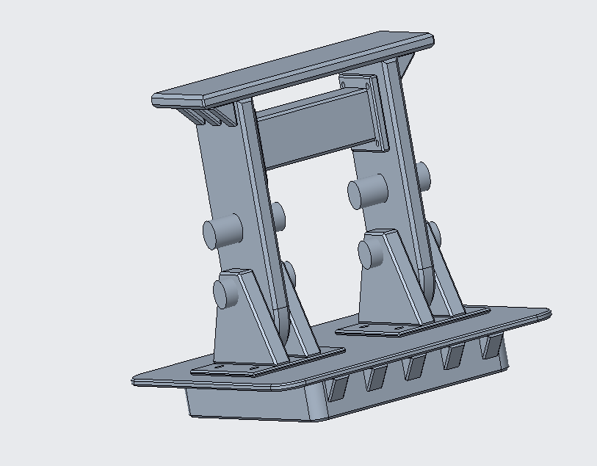
Simulation and Analysis
Silverliner VI Component Structural Assessment
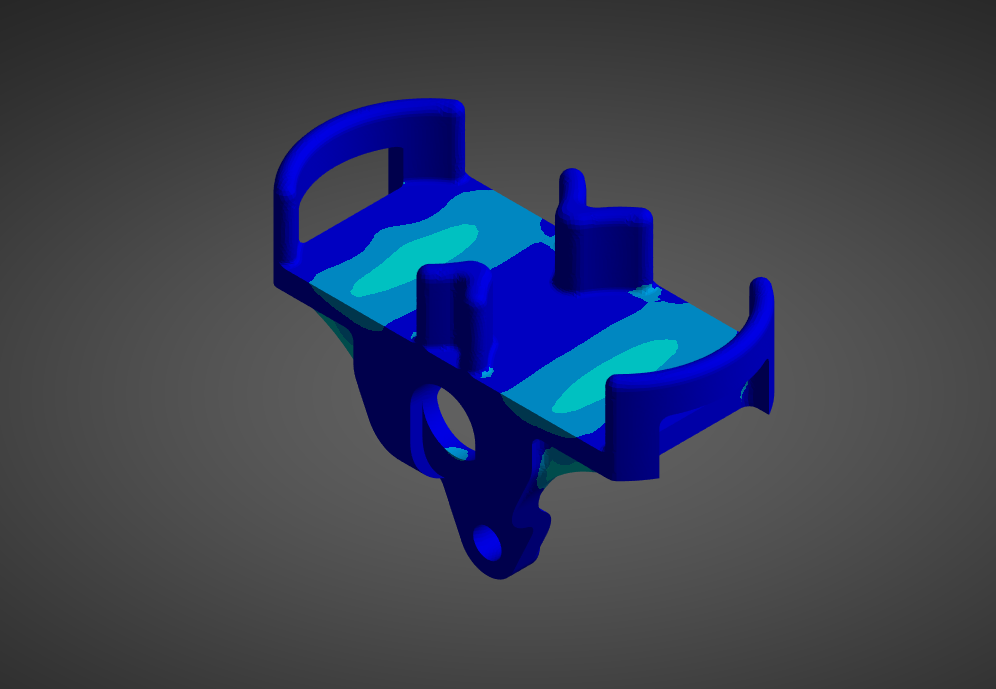
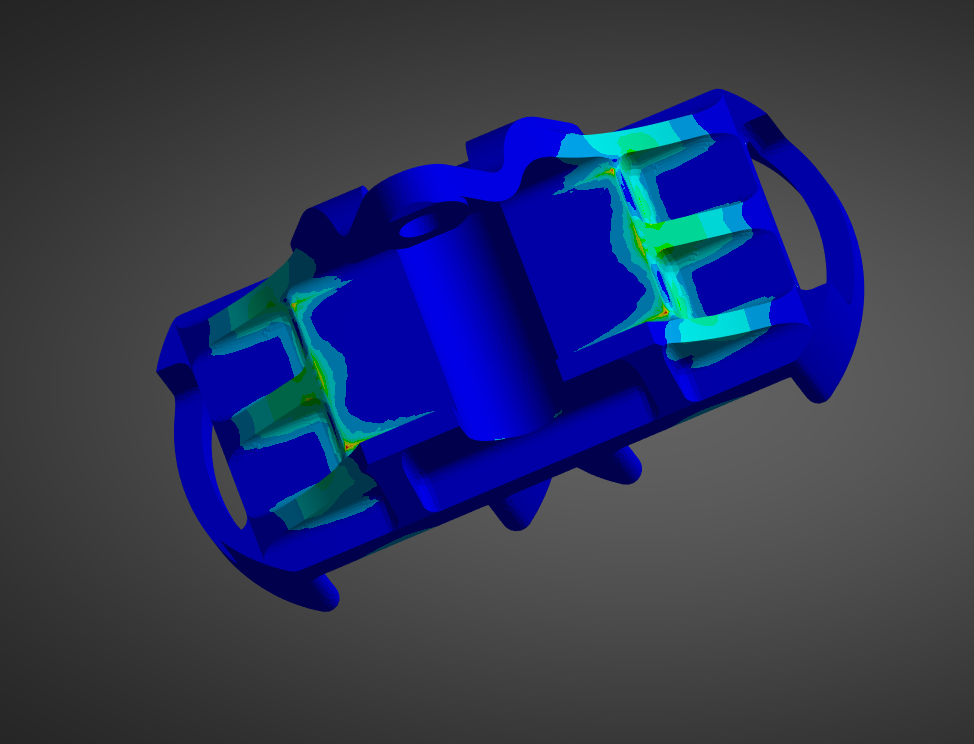
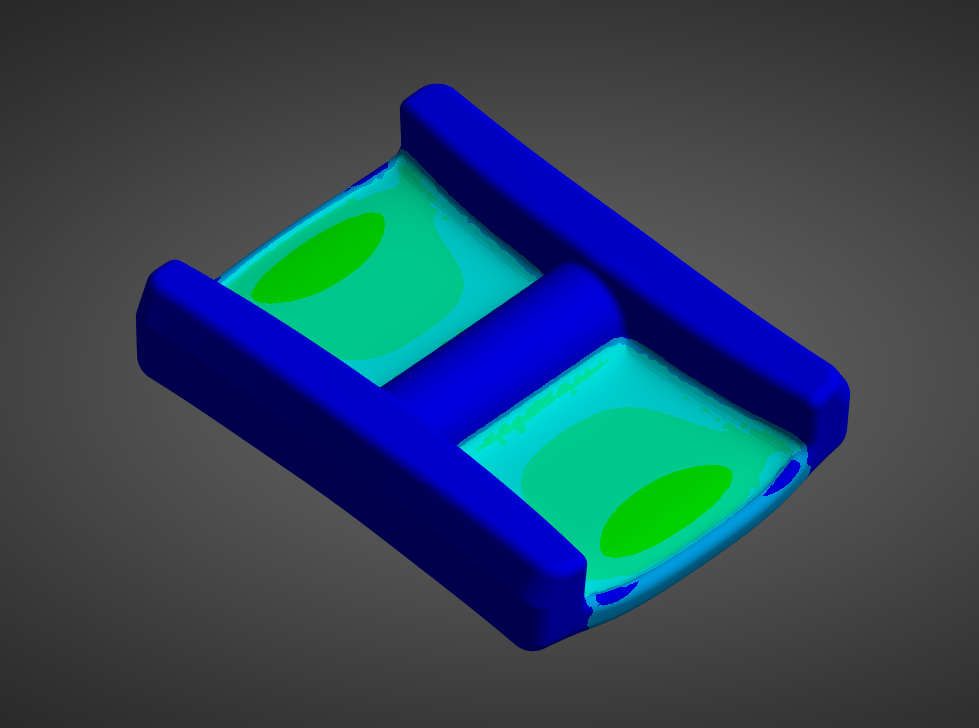
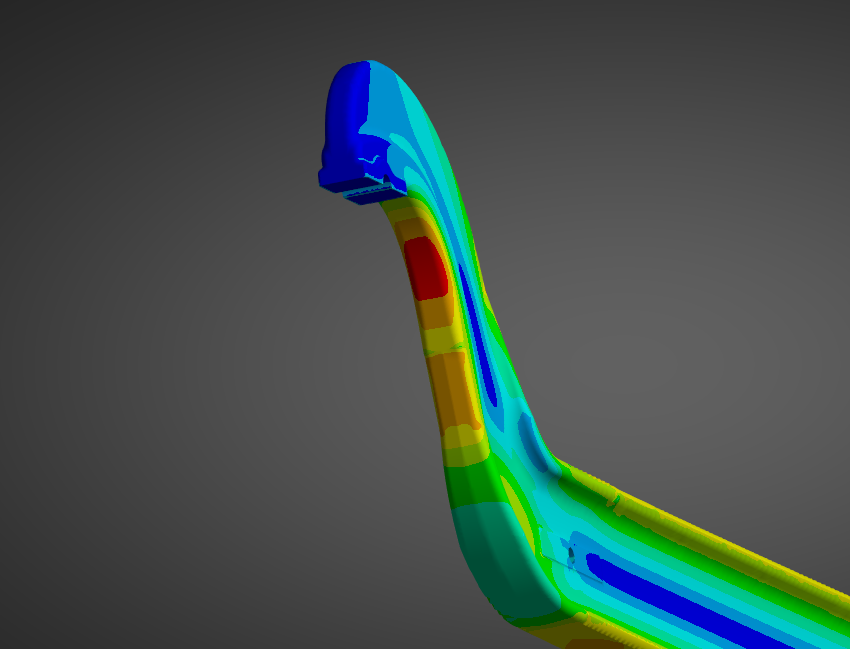
A set of structural components for Philadelphia's Silverliner VI needed to be evaluated to support the bid proposal process. I used ANSYS Mechanical to analyze their performance across multiple load cases, identify critical areas, and determine where design changes were needed. I then created a technical presentation outlining the recommended updates and the analysis supporting them.
Technical work
- Performed static structural analysis in ANSYS Mechanical across multiple load cases
- Evaluated component fatigue life using Goodman criteria
- Identified critical stress regions and areas requiring redesign
- Created a technical presentation outlining recommended design changes
Technical documentation
5 images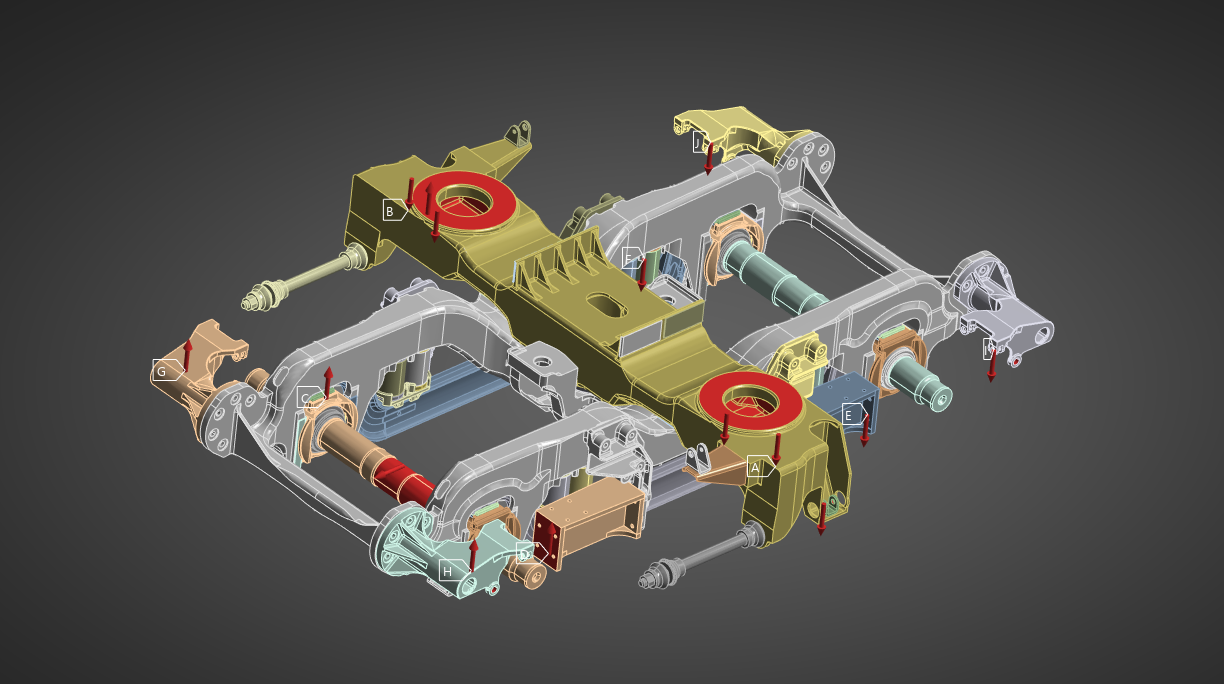
Automation
Technical Report Generator
During my internship, I noticed that a lot of the technical reports required the same repetitive tasks, especially importing and labeling images. To make the workflow faster and more consistent, I wrote a Python tool using the python-docx library to generate report sections and automatically insert labeled images. This report generator is now being utilized by the research and testing department to automate repetitive tasks and allocate more time to analysis.
Technical work
- Developed a Python tool using the python-docx library to automate technical report generation, reducing repetitive manual tasks by 60%
- Created a graphical user interface to simplify report setup and image folder selection
Technical documentation
1 images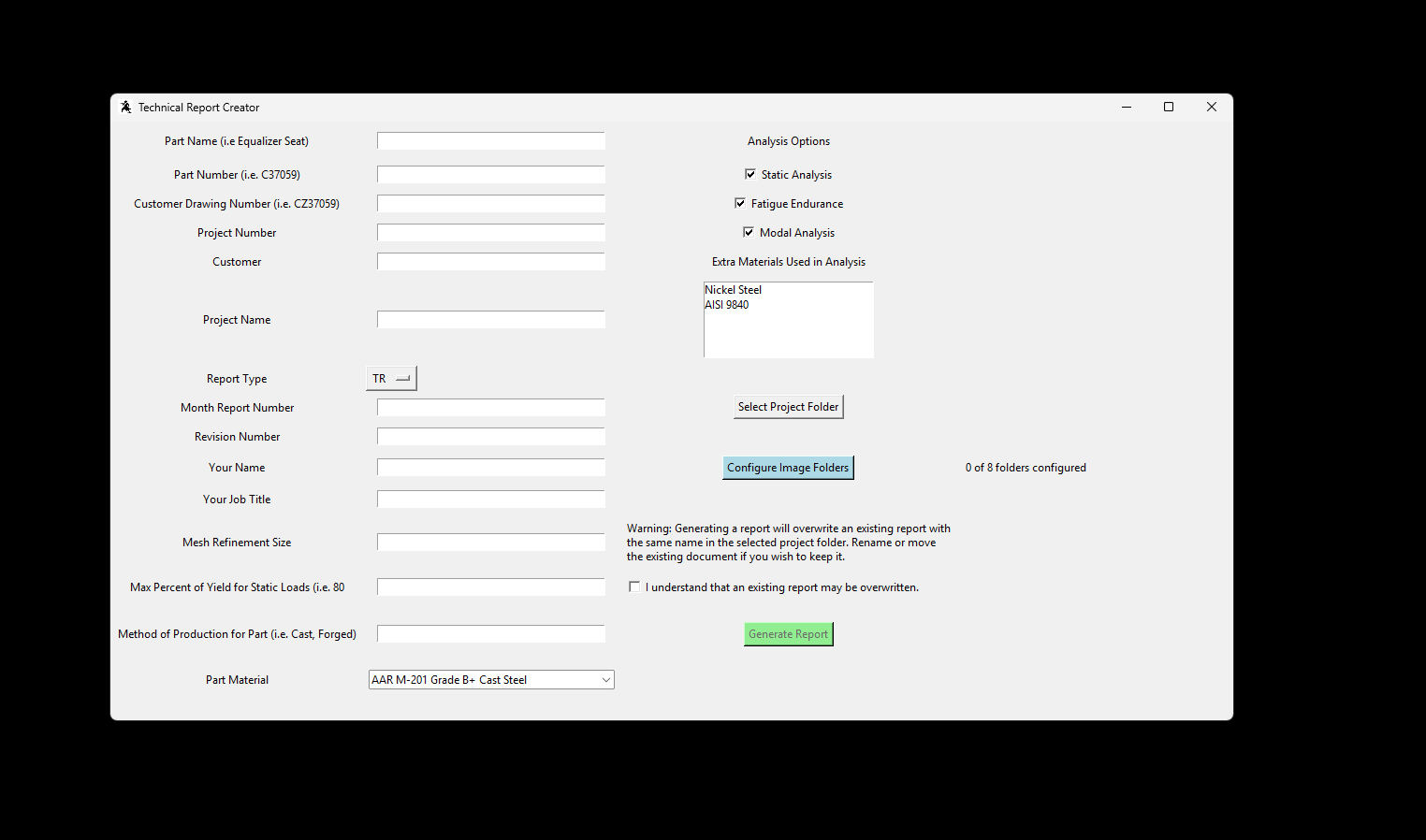
Simulation and Analysis
ADS Bracket Analysis
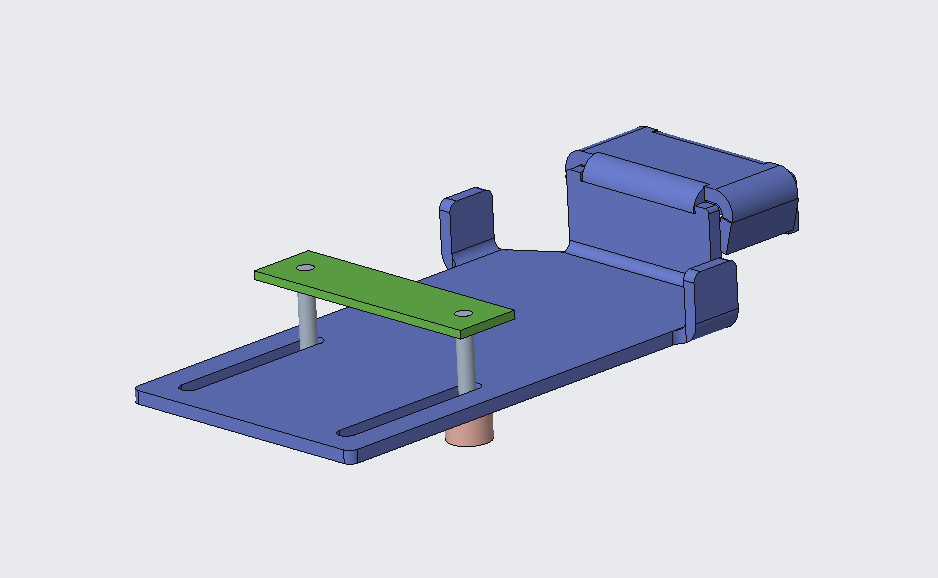
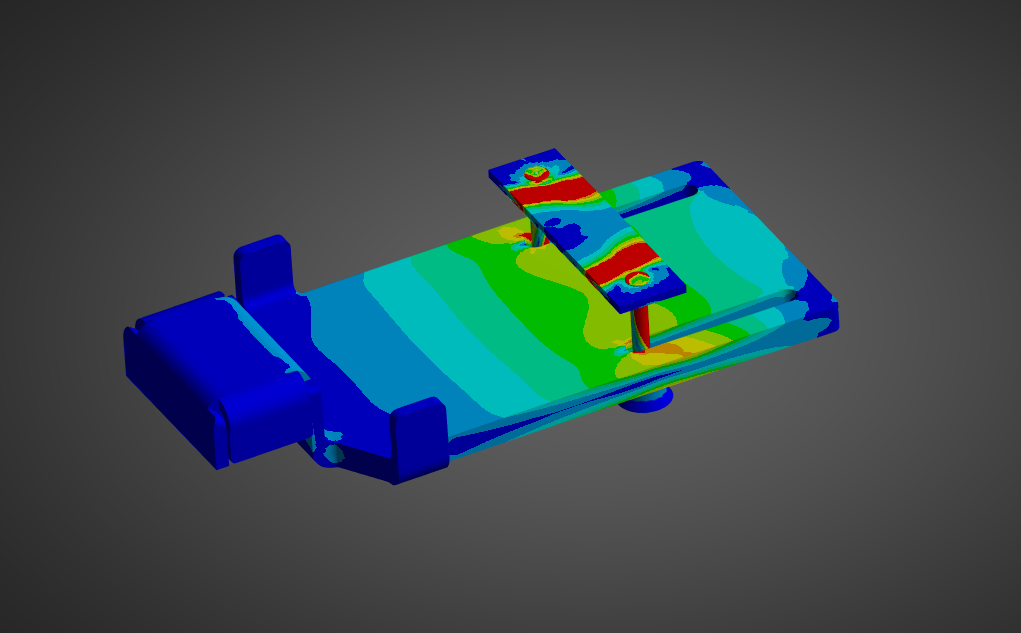
Amsted Digital Solution designed a bracket which attached to a truck sideframe containing a loading sensor. During testing, the bracket repeatedly failed, and I was tasked with determining the changes necessary in order to prevent future failure
Technical work
- Created a parametric model of the bracket in Creo to allow for dimension manipulation
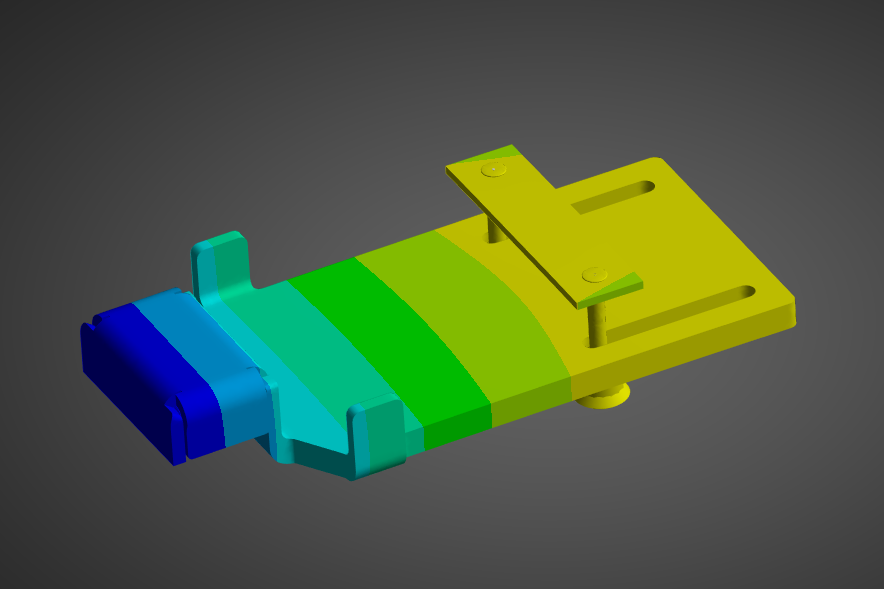
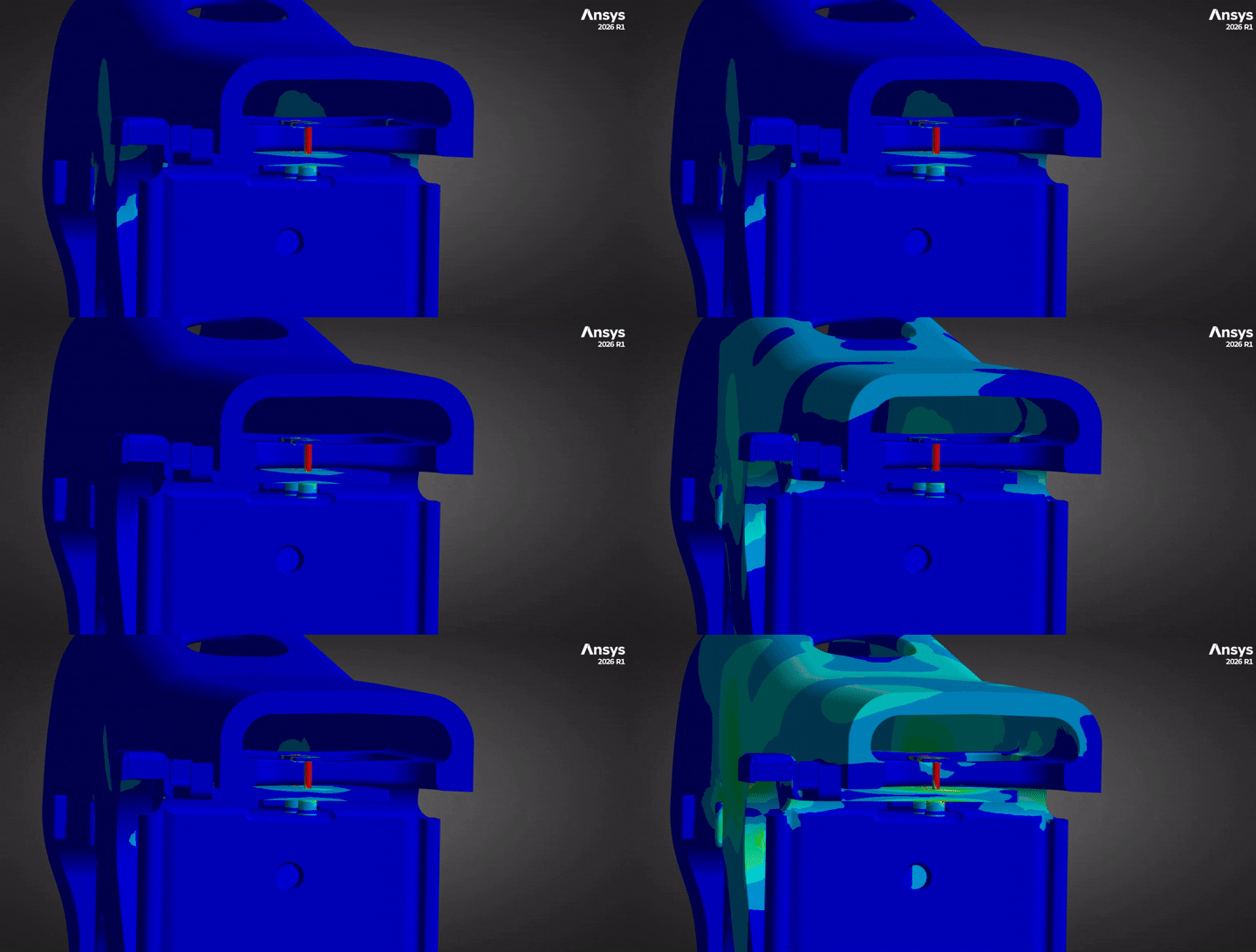
- Ran a parameter study on the thickness of the bracket, evaluating equivalent stress and deformation in a transient model
Technical documentation
4 images